


In today’s digital-first world, businesses rely on dozens—sometimes hundreds—of applications to run daily operations. From email and collaboration tools to CRM platforms, cloud services, and internal systems, employees must securely access multiple applications every day. Managing all these logins efficiently and securely has become a major challenge for organizations of every size.
This is where Single Sign-On (SSO) plays a critical role. Instead of forcing users to remember multiple usernames and passwords, SSO allows secure access to all approved applications with just one login. Beyond convenience, the SSO benefits extend deeply into productivity, security, compliance, and cost optimization.
As cyber threats increase and workforces become more distributed, identity has become the new security perimeter. Businesses adopting modern identity strategies now view SSO not as a luxury, but as a foundation for security and operational efficiency—especially in Zero Trust environments.
This article explores the Top 5 Business Benefits of SSO, explains why organizations are rapidly adopting it, and shows how SSO turns identity into a competitive advantage.
Table of Contents
- What Is Single Sign-On (SSO)?
- Why Businesses Are Adopting SSO Faster Than Ever
- Top 5 Business Benefits of SSO
- How SSO Turns Identity Into a Competitive Advantage
- Common Mistakes Businesses Make with SSO
- Best Practices for Implementing SSO Successfully
- How Trevonix Helps Organizations Unlock SSO Benefits
- Conclusion
What Is Single Sign-On (SSO)?
Simple Definition of SSO
Single Sign-On (SSO) is an authentication method that allows users to log in once and gain access to multiple applications and systems without needing to sign in again for each one.
Instead of remembering many passwords, users authenticate one time through a trusted identity provider. That identity is then securely shared with connected applications.
This simple concept delivers powerful SSO benefits for businesses, users, and IT teams alike.
How SSO Works Across Multiple Applications
SSO works by creating a trusted relationship between:
- An identity provider (IdP) that verifies the user
- Multiple service providers (applications) that rely on that verification
When a user logs in:
- The identity provider authenticates the user.
- The identity provider sends a secure token to approved applications.
- Applications trust the token and grant access without asking for another password.
This secure flow allows seamless access across cloud, SaaS, and on-premises systems.
Difference Between Separate Logins and Centralized Access
Without SSO:
- Each application has its own login
- Users reuse passwords
- IT teams manage multiple credential stores
- Security gaps increase
With SSO:
- One identity controls access
- Authentication is centralized
- Security policies are consistent
- Users have a smoother experience
These differences explain why SSO benefits go far beyond convenience.
Role of SSO in Modern Identity and Access Management
SSO is a core component of modern Identity and Access Management (IAM). It acts as the gateway through which:
- Multi-factor authentication (MFA) is enforced
- Access policies are applied
- User activity is monitored
- Zero Trust principles are implemented
In short, SSO is the front door of enterprise security.
Why Businesses Are Adopting SSO Faster Than Ever
Growth of Cloud and SaaS Applications
Most organizations now use dozens of SaaS tools. Each new tool adds another login, another password, and another risk.
SSO simplifies access across:
- HR systems
- Finance platforms
- Collaboration tools
- Developer environments
This is one of the most practical SSO benefits driving adoption.
Remote and Hybrid Workforce Challenges
Remote work has removed traditional network boundaries. Employees log in from:
- Home networks
- Personal devices
- Different locations
SSO ensures secure, consistent access regardless of where users work—an essential requirement in Zero Trust security models.
Increasing Security and Compliance Requirements
Regulations demand:
- Access visibility
- Strong authentication
- Audit-ready logs
SSO centralizes identity data, making compliance easier and reducing manual effort.
Why SSO Is Essential to Modern Zero Trust Environments
Zero Trust assumes no user or device is trusted by default. SSO enables Zero Trust by:
- Verifying identity before access
- Enforcing policies consistently
- Integrating MFA and risk-based controls
Without SSO, Zero Trust is difficult to scale.
Top 5 Business Benefits of SSO
1. Faster Employee Onboarding and Offboarding
Employee lifecycle management is one of the clearest SSO benefits for businesses.
One-Time Access Provisioning Instead of Multiple Logins
With SSO, IT teams assign access once. Users instantly gain access to all required tools through a single login.
This replaces:
- Manual account creation
- Repetitive setup tasks
- Human error
Faster Productivity for New Hires
New employees can start working on day one. They don’t wait for multiple accounts or credentials.
This improves:
- First-day experience
- Time to productivity
- Employee confidence
Secure and Quick Access Removal for Exiting Employees
When employees leave, SSO allows instant access revocation. One action removes access everywhere.
This prevents:
- Orphaned accounts
- Insider threats
- Data leaks
Business Impact: Reduced Delays and Lower Risk
These onboarding and offboarding improvements demonstrate real, measurable SSO benefits:
- Faster operations
- Reduced security risk
- Lower administrative burden
2. Reduced IT Support and Operational Costs
Password Reset Requests as a Major IT Burden
Password resets are one of the most common helpdesk requests. They consume time and resources.
SSO drastically reduces password fatigue.
How SSO Minimizes Password-Related Issues
With fewer passwords:
- Users forget less
- Security improves
- IT tickets drop
This is one of the most immediate SSO benefits organizations notice.
Lower Helpdesk Workload and Cost Savings
Reduced tickets mean:
- Lower operational costs
- Smaller support teams
- Faster response times
Better Use of IT Resources for Strategic Initiatives
Instead of fixing login issues, IT teams focus on:
- Security improvements
- Digital transformation
- Innovation
3. Improved Employee Productivity and Experience
Seamless Login Across Tools and Systems
SSO eliminates repeated logins throughout the day. Employees move smoothly between tools.
Less Time Wasted Switching Accounts
Small delays add up. SSO saves minutes every day per employee—resulting in significant productivity gains.
Improved User Satisfaction and Engagement
Employees appreciate simplicity. Better login experiences lead to:
- Higher satisfaction
- Reduced frustration
- Better adoption of tools
Impact on Team Efficiency and Collaboration
Smooth access supports faster collaboration and better teamwork—another key SSO benefits area.
4. Simplified Compliance, Auditing, and Reporting
Centralized Identity and Access Visibility
SSO provides a single view of:
- Who has access
- What they access
- When they access it
Easier Compliance with Security and Data Regulations
Centralized access controls simplify compliance with:
- ISO standards
- SOC frameworks
- Industry regulations
Faster Audits with Clear Access Logs
Auditors need clarity. SSO delivers detailed logs without manual effort.
Reduced Risk of Policy Violations
By enforcing consistent access rules, SSO reduces misconfigurations and violations—another powerful SSO benefits outcome.
5. Stronger Security and Zero Trust Enablement
How SSO Supports Secure, Controlled Access
SSO centralizes authentication, making it easier to apply security controls across all systems.
Integration with MFA and Adaptive Authentication
SSO works seamlessly with:
- Multi-factor authentication
- Risk-based access
- Context-aware policies
Reduced Attack Surface Through Centralized Control
Fewer passwords mean fewer attack vectors.
This strengthens overall security posture.
Why SSO Is Critical to a Zero Trust Security Model
In Zero Trust, identity is everything. SSO is the foundation that makes Zero Trust scalable and manageable.
How SSO Turns Identity Into a Competitive Advantage
SSO transforms identity from a cost center into a business enabler.
From Access Management to Business Acceleration
Faster access means faster work, faster decisions, and faster growth.
Supporting Scalability and Digital Transformation
As businesses grow, SSO scales without adding complexity—one of the most strategic SSO benefits.
Reducing Friction While Increasing Security
SSO proves that security and user experience don’t have to conflict.
Long-Term Value of Investing in SSO
SSO delivers long-term ROI through:
- Lower costs
- Stronger security
- Better employee experience
Common Mistakes Businesses Make with SSO
Treating SSO as Only a Login Feature
SSO is a security platform—not just a convenience tool.
Poor Integration Planning
Incomplete application coverage weakens SSO value.
Ignoring Governance and Monitoring
Without monitoring, SSO visibility is lost.
Not Aligning SSO with Zero Trust Goals
SSO should support Zero Trust, not exist separately.
Best Practices for Implementing SSO Successfully
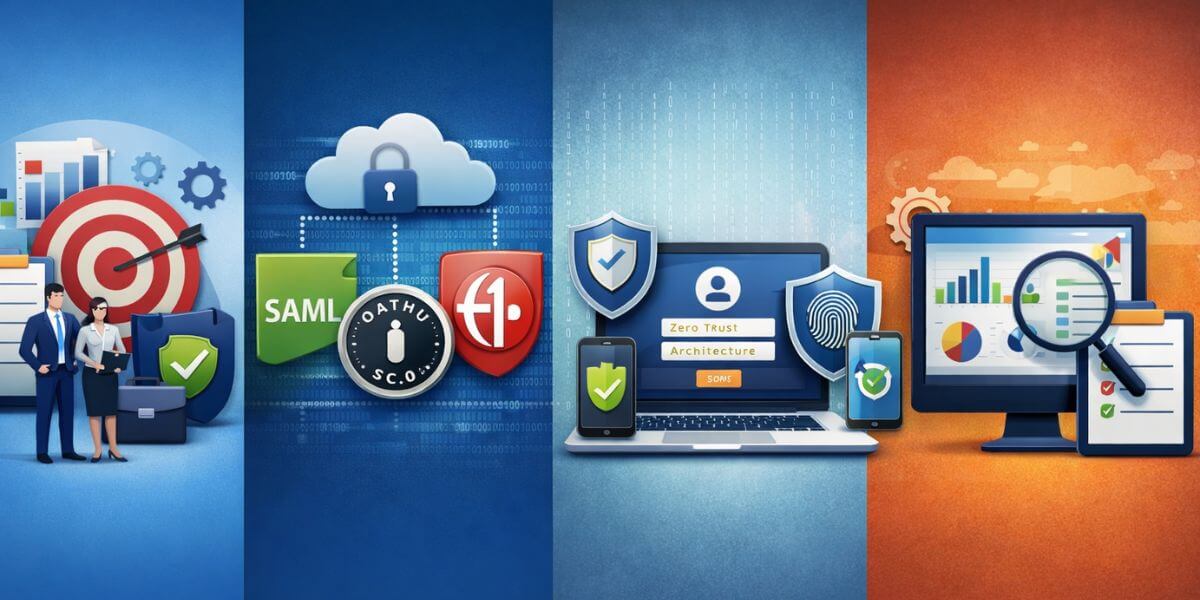
Align SSO with Business Objectives
Start with productivity, security, and compliance goals.
Choose Standards-Based SSO Solutions
Use proven standards like SAML, OAuth, and OpenID Connect.
Integrate SSO with Zero Trust Architecture
SSO should work alongside device trust, MFA, and adaptive policies.
Monitor, Audit, and Continuously Improve
Regular reviews ensure long-term SSO benefits.
How Trevonix Helps Organizations Unlock SSO Benefits
Trevonix helps organizations design and implement modern identity strategies that maximize SSO benefits while strengthening security.
With deep expertise in identity and access management, Trevonix supports businesses in:
- SSO implementation and optimization
- Zero Trust architecture design
- Identity governance and security transformation
Conclusion
Single Sign-On is no longer optional. It is a foundational capability for modern businesses seeking efficiency, security, and scalability.
The SSO benefits—from faster onboarding and lower IT costs to stronger security and Zero Trust enablement—deliver measurable business value across the organization.
Organizations that treat identity as a strategic asset gain a clear competitive edge.
Trevonix, a global company headquartered in London, helps enterprises unlock the full value of SSO and modern identity security. By aligning SSO with Zero Trust principles and business objectives, Trevonix enables organizations to reduce risk, improve productivity, and accelerate digital transformation.