
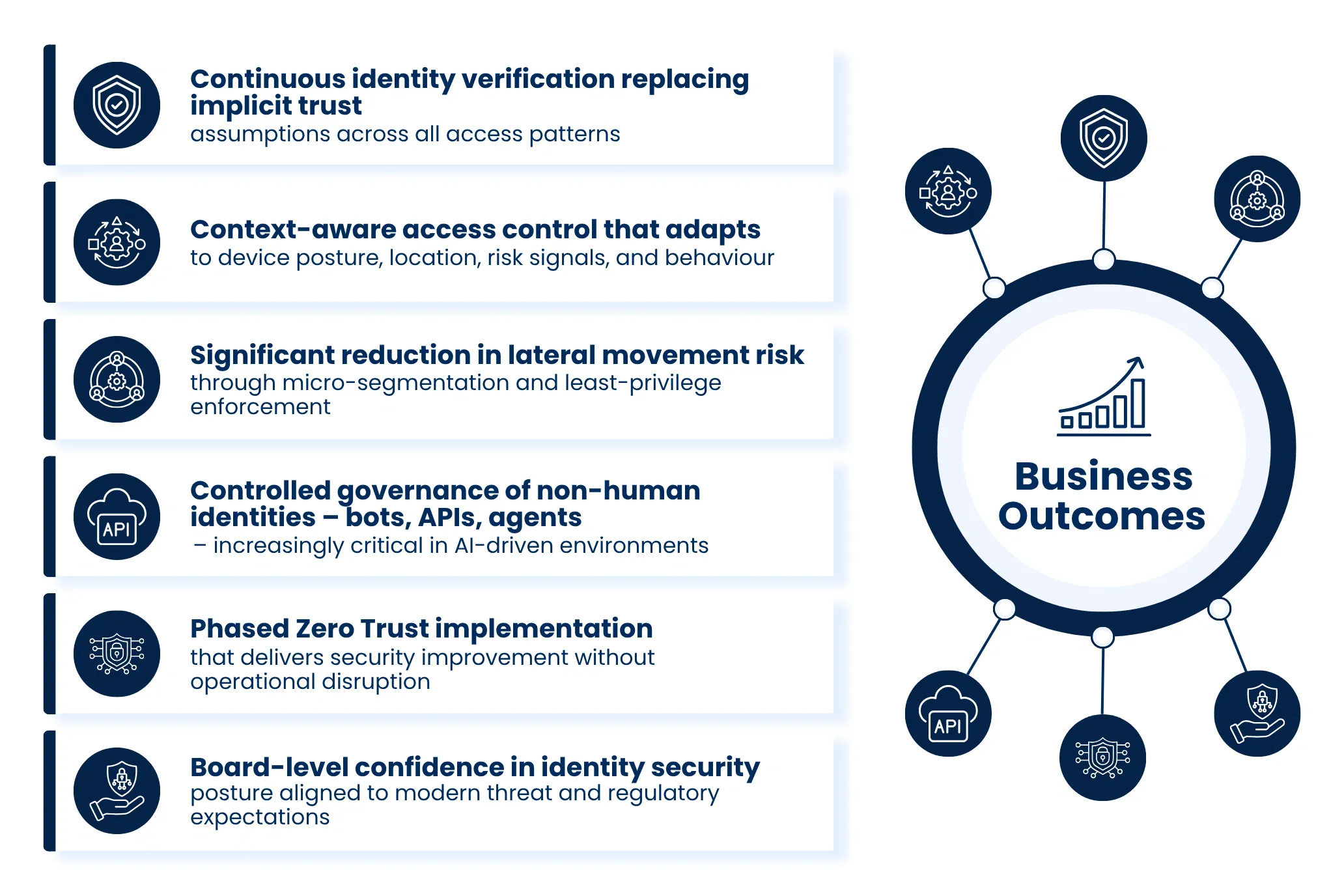
We design and implement Zero Trust architectures that enforce continuous authentication and least privilege access.
The perimeter is gone. Remote work, cloud adoption, API ecosystems, and the explosion of non-human identities – bots, agents, microservices – have made traditional network-centric security models obsolete. Attackers exploit implicit trust assumptions: once inside the network, lateral movement is trivial. AI has accelerated this: deepfakes, synthetic identities, and credential abuse are now automated and scalable. Zero Trust – the principle that no user, device, or workload should be trusted by default – is not a marketing term; it is the only coherent response to this threat landscape. But Zero Trust without identity at its core is just a network diagram.
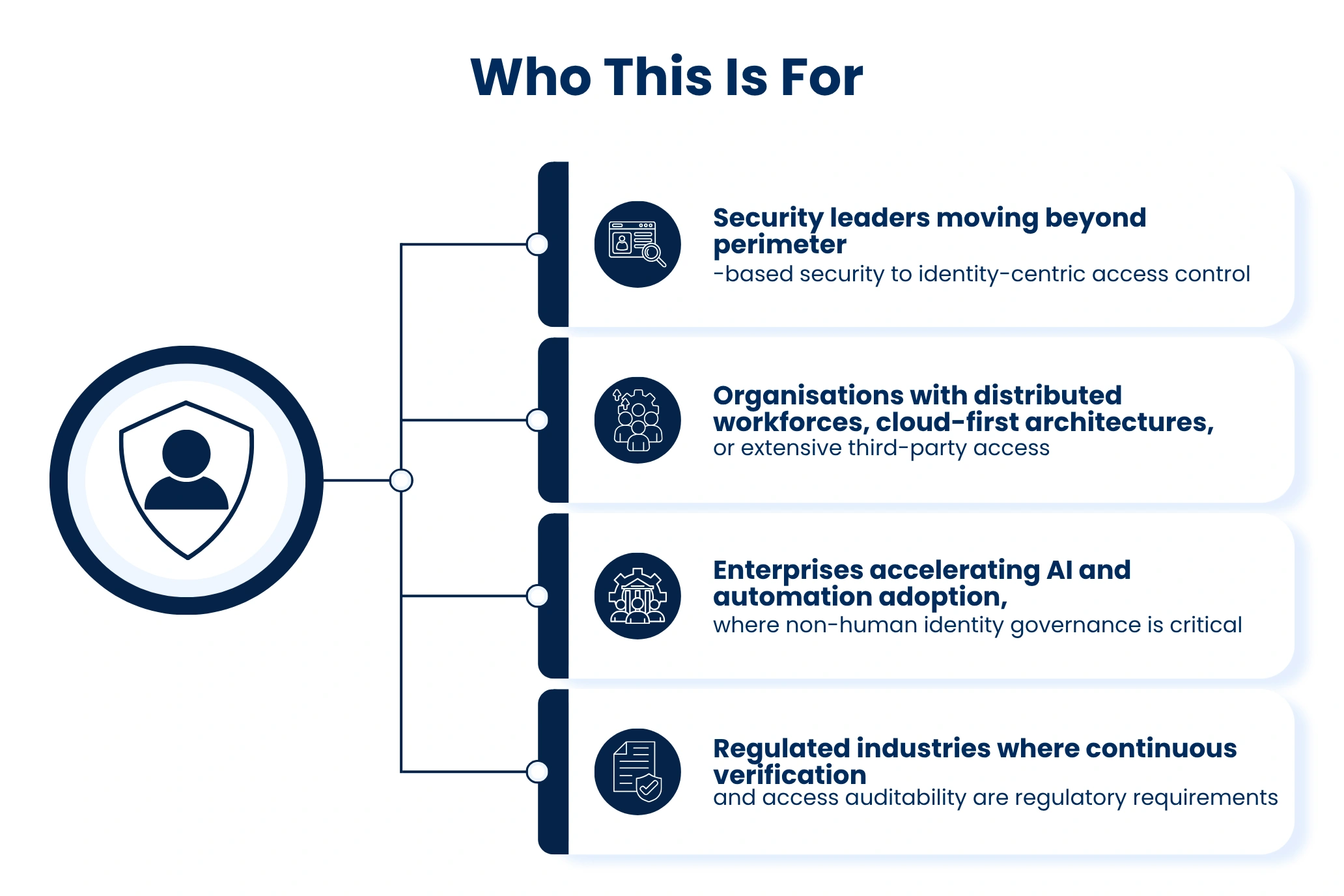
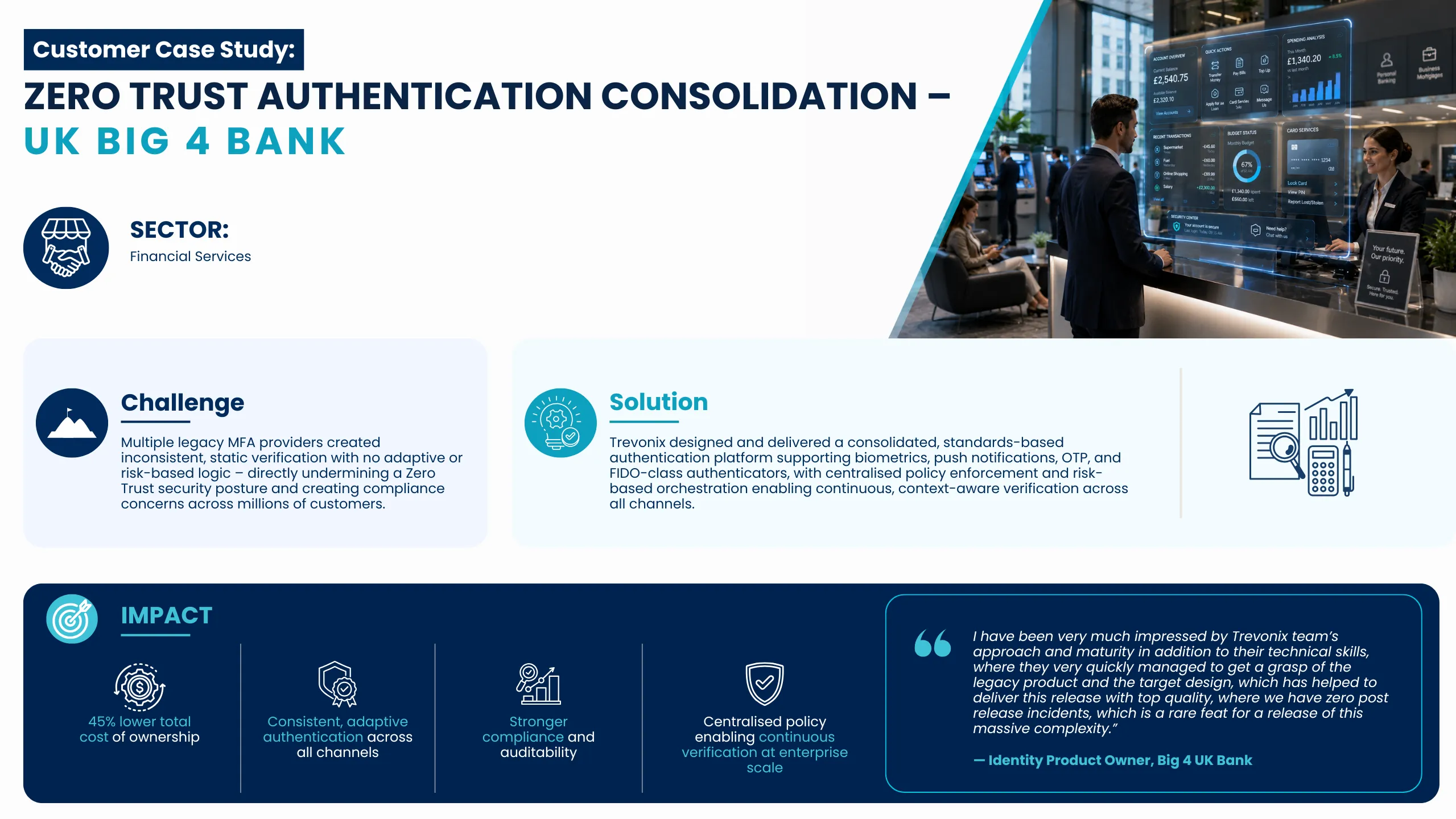
Trevonix implements identity-first Zero Trust architectures that move organisations from implicit trust and static access policies to continuous verification and context-aware access decisions. We start with identity – because identity is the control plane through which Zero Trust is enforced – and extend outward to device posture, application access, and workload identity. Our approach is phased and maturity-driven: we do not advocate big-bang Zero Trust deployments that create new operational risk. Instead, we build in stages – starting with the highest-risk access patterns and expanding systematically. We have delivered adaptive MFA and risk-based orchestration for telecom CIAM unifications serving millions of users, and continuous verification frameworks for financial services organisations under active regulatory scrutiny.


.png)

.png)
.png)

.png)
.png)
.png)

.avif)


%20(32).png)


%20(33).png)
%20(30).png)
%20(31).png)


%20(1).webp)