


Cybersecurity is entering a new era. By 2026, organizations will no longer protect just networks or devices—they will protect identities. As businesses adopt cloud platforms, SaaS applications, remote work models, and API-driven ecosystems, identity has become the most targeted attack surface. This shift is why single sign on is no longer optional. It is a core cyber priority.
Traditional security models relied on firewalls, VPNs, and perimeter defenses. But today’s workforce logs in from anywhere, uses dozens of applications, and accesses sensitive data across multiple environments. In this reality, attackers do not break in—they log in using stolen or weak credentials. This makes access control the weakest link in most organizations.
Single sign on addresses this challenge by centralizing authentication, reducing password sprawl, and creating a unified access experience. When implemented correctly, it becomes the foundation of a strong identity strategy and a modern iam strategy. In 2026, organizations that fail to prioritize SSO will struggle with security gaps, compliance risks, and poor user experience.
This blog explains why single sign on must be your top cyber priority for 2026, how it fits into a broader sso strategy, and how it supports business growth, compliance, and digital transformation.
Table of Contents
- What Is Single Sign-On (SSO)?
- Why Identity Strategy Matters More Than Ever in 2026
- Key Reasons Single Sign-On Is a 2026 Cyber Priority
- Weak Credentials Are Still the #1 Attack Vector
- Explosion of Workforce Applications
- Hybrid and Remote Work Demand Frictionless Security
- Compliance and Regulatory Pressure
- Single Sign-On as the Foundation of a Strong IAM Strategy
- Business Benefits of a Modern SSO Strategy
- Common Mistakes Organizations Make with SSO
- How to Build a Future-Ready SSO Strategy for 2026
- Why Single Sign-On Is a Board-Level Decision
- How Trevonix Enables Identity-First Access Frameworks
- Conclusion
What Is Single Sign-On (SSO)?
Single sign on (SSO) is an authentication method that allows users to access multiple applications with one set of login credentials. Instead of logging into each system separately, users authenticate once and gain access to all approved resources.
From a security perspective, single sign on centralizes authentication under one trusted identity provider. This means passwords, policies, and access rules are managed in one place. From a user perspective, SSO removes login fatigue and improves productivity.
SSO works using secure standards such as SAML, OAuth, and OpenID Connect. These protocols ensure that authentication requests are validated without exposing credentials to every application.
In 2026, single sign on is no longer just a convenience feature. It is a critical component of an enterprise-wide identity strategy and an essential building block of any modern iam strategy.
Why Identity Strategy Matters More Than Ever in 2026
Identity Becoming the New Security Perimeter
The concept of a network perimeter is outdated. Cloud adoption and remote work have dissolved traditional boundaries. Today, identity is the new perimeter.
Every user, device, API, and application interaction begins with authentication. If identity is compromised, security controls become meaningless. This is why organizations must rethink access management through a strong identity strategy built on single sign on.
SSO ensures that authentication is consistent, controlled, and monitored across all environments.
Growth of Cloud Apps, SaaS, Hybrid Work, and APIs
By 2026, the average organization will use hundreds of SaaS applications. Employees access tools for communication, finance, development, analytics, and customer management—all from different vendors.
Managing access individually for each application creates chaos. Without single sign on, IT teams struggle to track who has access to what. This weakens the overall iam strategy and increases breach risk.
SSO brings order by connecting all applications to one central identity system.
Why Access Control Failures Lead to Major Breaches
Many high-profile breaches happen because of:
- Reused passwords
- Orphaned accounts
- Excessive access permissions
Without centralized authentication, access control becomes fragmented. Single sign on reduces these risks by enforcing consistent policies across all applications, strengthening the organization’s identity strategy.
How SSO Strengthens a Centralized Identity Strategy
A strong identity strategy requires visibility, control, and scalability. Single sign on provides all three by:
- Centralizing authentication
- Enforcing access policies
- Supporting integration with MFA and Zero Trust
This makes SSO the cornerstone of identity-first security.
Key Reasons Single Sign-On Is a 2026 Cyber Priority
Weak Credentials Are Still the #1 Attack Vector
Despite advanced security tools, password-based attacks remain the most common threat.
Credential-Based Attacks Explained Simply
Attackers steal usernames and passwords using phishing, malware, or data leaks. Once they have credentials, they log in like normal users. This makes detection difficult.
How Single Sign On Reduces Password Sprawl
Without SSO, users manage dozens of passwords. With single sign on, users maintain one strong credential, reducing exposure and improving security.
Importance of Centralized Authentication
Centralized authentication allows organizations to monitor login activity, enforce strong policies, and quickly revoke access—key elements of an effective iam strategy.
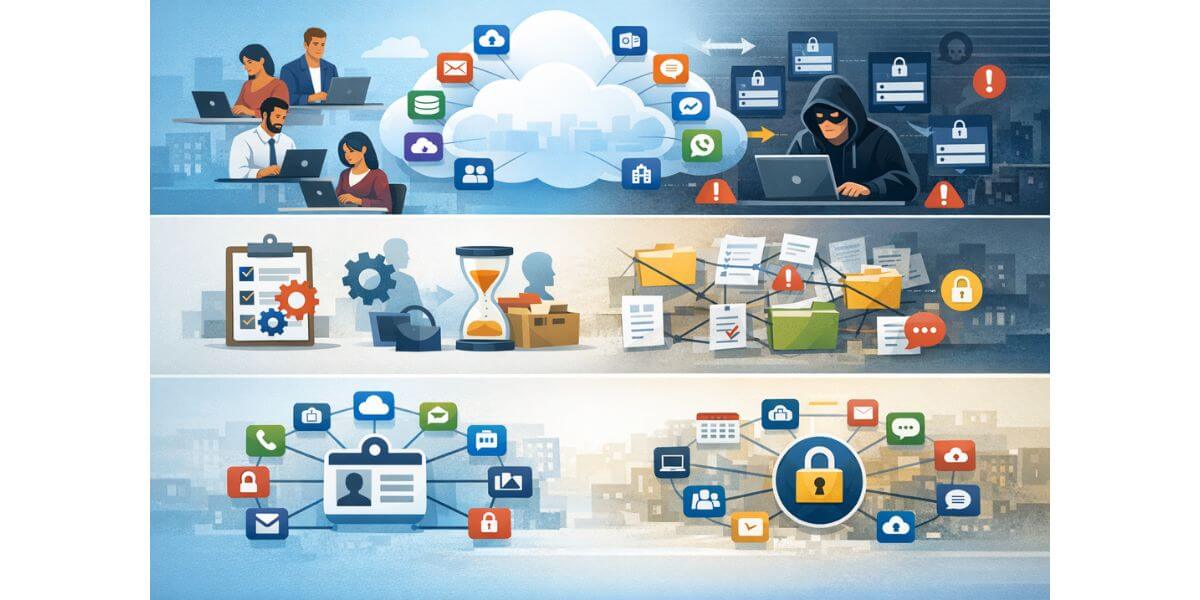
Explosion of Workforce Applications
Rise of SaaS and Cloud Platforms
Cloud tools accelerate innovation but increase access complexity. Each new app adds another login point for attackers.
Why Managing Access Individually Is Risky
Manual access management leads to:
- Inconsistent permissions
- Delayed offboarding
- Security blind spots
How SSO Simplifies Access Governance
Single sign on simplifies access governance by linking applications to one identity source, supporting a scalable sso strategy.
Hybrid and Remote Work Demand Frictionless Security

Security Challenges of Remote Access
Remote workers access systems from home networks, personal devices, and different locations. This increases attack surface.
Balancing User Experience and Protection
Too many security steps reduce productivity. Too few increase risk. Single sign on balances both.
SSO as an Enabler of Secure Remote Work
With single sign on, users authenticate once and securely access all tools—making it ideal for hybrid work environments and a modern identity strategy.
Compliance and Regulatory Pressure
GDPR, ISO, SOC 2 Overview (High-Level)
Regulations require organizations to:
- Control access to sensitive data
- Maintain audit logs
- Enforce least privilege
How SSO Supports Audit Readiness
Single sign on provides centralized logs and consistent policies, making audits easier and faster.
Role of SSO in Policy Enforcement
SSO ensures policies are enforced across all applications, strengthening compliance and the overall iam strategy.
Single Sign-On as the Foundation of a Strong IAM Strategy
How SSO Fits into a Broader IAM Strategy
An effective iam strategy includes:
- Identity lifecycle management
- Access governance
- Authentication controls
Single sign on is the entry point that connects all these components.
Connection with MFA, Zero Trust, and Access Governance
SSO integrates seamlessly with:
- Multi-factor authentication (MFA)
- Zero Trust models
- Role-based access controls
This makes it essential for a future-ready sso strategy.
Why SSO Should Be Implemented First—Not Last
Organizations often delay SSO implementation. This is a mistake. SSO should be the first step in building an identity-first security architecture.
Importance of Designing a Scalable SSO Strategy
A scalable sso strategy supports:
- New applications
- Business growth
- Cloud expansion
Planning for scale ensures long-term success.
Business Benefits of a Modern SSO Strategy
Reduced Cyber Risk
- Fewer credentials mean fewer attack paths
- Centralized control improves visibility
This strengthens both the identity strategy and iam strategy.
Improved User Experience
- One login, multiple applications
- Faster onboarding and offboarding
Happy users are more productive and less likely to bypass security.
Operational Efficiency
- Reduced IT helpdesk requests
- Easier access management
SSO lowers operational costs while improving security.
Faster Digital Transformation
- Enables cloud adoption
- Supports mergers and acquisitions
Single sign on removes identity barriers to growth.
Common Mistakes Organizations Make with SSO
- Treating SSO as a standalone tool
- Ignoring integration with MFA
- Poor application onboarding
- Lack of long-term identity strategy planning
Avoiding these mistakes ensures SSO delivers real value.
How to Build a Future-Ready SSO Strategy for 2026
A strong sso strategy should include:
- Central identity provider
- Integration with IAM tools
- Support for Zero Trust
- Scalability and automation
This approach future-proofs your iam strategy.
Why Single Sign-On Is a Board-Level Decision
Cyber risk is business risk. Breaches impact revenue, reputation, and compliance. Because single sign on protects the core of digital access, it deserves board-level attention and investment.
How Trevonix Enables Identity-First Access Frameworks
Trevonix helps organizations design and implement modern identity-first access frameworks that align single sign on with business goals. By combining deep IAM expertise with scalable architectures, Trevonix supports enterprises at every stage of their identity strategy journey.
Conclusion
As we move into 2026, cybersecurity success will depend on how well organizations protect identities. Single sign on is no longer a convenience—it is a strategic necessity. It reduces cyber risk, improves user experience, supports compliance, and enables digital growth.
A strong identity strategy, built on a scalable sso strategy and aligned with a modern iam strategy, starts with SSO.
Trevonix, a global cybersecurity company headquartered in London, empowers organizations to adopt identity-first security models that scale with the future. Learn more at https://trevonix.com and take the first step toward secure, seamless access in 2026 and beyond.