


Modern organizations no longer operate within fixed office walls. Employees work from home, contractors log in from different regions, and partners access internal systems through cloud platforms. While this flexibility increases productivity, it also creates serious security risks. Traditional perimeter-based security models are no longer enough.
This is where workforce identity becomes critical. Instead of protecting networks alone, organizations must protect identities—who is accessing systems, what they can access, and under what conditions.
Okta Workforce Identity has emerged as a leading solution that helps organizations manage workforce access securely, centrally, and at scale. It provides a strong identity foundation that supports modern workforce security while improving user experience.
In this blog, we will explore what workforce identity is, why it matters, how okta workforce identity works, and how it helps organizations build secure, scalable, and compliant workforce identity management systems.
Table of Contents
- What Is Workforce Identity?
- Understanding Okta Workforce Identity
- Why Workforce Identity Management Matters Today
- Key Components of Okta Workforce Identity
- How Okta Workforce Identity Strengthens Workforce Security
- Benefits of Implementing Okta Workforce Identity
- Okta Workforce Identity and Zero Trust Security
- Common Workforce Identity Management Challenges
- Best Practices for Workforce Identity Management with Okta
- How Trevonix Helps Implement Okta Workforce Identity
- Conclusion
What Is Workforce Identity?
Simple definition of workforce identity
Workforce identity refers to the digital identities of people who work for an organization. This includes employees, contractors, consultants, and business partners. Each workforce identity defines who the user is, what systems they can access, and what actions they are allowed to perform.
Workforce identity ensures that the right person gets the right access at the right time, and nothing more.
Difference between workforce identity and customer identity
Workforce identity and customer identity serve different purposes:
- Workforce identity is used internally for employees and partners.
- Customer identity is used externally for end users, customers, or subscribers.
Workforce identity focuses heavily on security, compliance, and operational control, while customer identity focuses more on user experience and scalability.
Who it applies to: employees, contractors, partners
Workforce identity applies to:
- Full-time employees
- Remote and hybrid workers
- Contractors and freelancers
- Third-party vendors and partners
Each of these users may need different access levels, making workforce identity management essential.
Role of workforce identity in enterprise security
Workforce identity plays a central role in enterprise security by:
- Preventing unauthorized access
- Reducing credential misuse
- Enforcing least-privilege access
- Supporting compliance requirements
Without strong workforce identity controls, organizations are exposed to identity-based attacks.
Understanding Okta Workforce Identity
Overview of Okta Workforce Identity platform
Okta Workforce Identity is a cloud-based identity and access management platform designed to secure workforce access across applications, devices, and locations. It acts as a central identity layer for the organization.
With okta workforce identity, organizations can manage authentication, authorization, and user lifecycle from a single platform.
How Okta centralizes identity and access
Okta centralizes identity by:
- Acting as a single identity provider
- Connecting to hundreds of SaaS and on-premise applications
- Enforcing consistent access policies
This centralization simplifies workforce identity management and reduces security gaps.
Core capabilities that support workforce security
Key capabilities include:
- Single Sign-On (SSO)
- Multi-Factor Authentication (MFA)
- Lifecycle management
- Policy-based access controls
- Continuous monitoring
Together, these features strengthen workforce security across the enterprise.
Why organizations choose Okta for workforce identity management
Organizations choose Okta because it is:
- Cloud-native and scalable
- Easy to integrate with existing systems
- Secure by design
- Trusted globally
Okta supports modern workforce identity needs without adding complexity.
Why Workforce Identity Management Matters Today
Rise in credential-based attacks
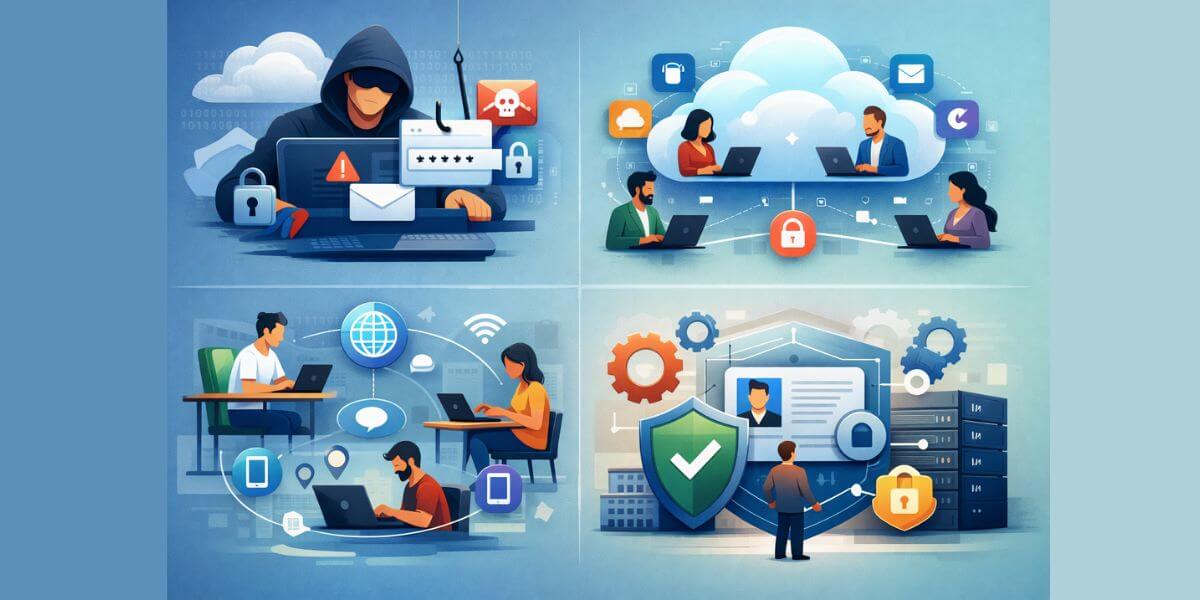
Most cyberattacks today start with stolen or compromised credentials. Password reuse, phishing, and weak authentication make workforce accounts easy targets.
Strong workforce identity management helps reduce these risks.
Growth of SaaS and cloud applications
Organizations now use hundreds of SaaS tools. Managing access manually is not practical. Without centralized identity control, access sprawl becomes a major security risk.
Security challenges of distributed teams
Remote and hybrid workforces access systems from different locations and devices. Traditional network security cannot keep up with this change.
Workforce identity becomes the new security anchor.
Why identity must be centrally governed
Central governance ensures:
- Consistent policies
- Faster access changes
- Better visibility
- Stronger workforce security
This is why workforce identity management is critical today.
Key Components of Okta Workforce Identity
Single Sign-On (SSO)
How SSO improves productivity
Single Sign-On allows users to log in once and access multiple applications. This saves time and improves productivity.
Reduces password fatigue
SSO reduces the number of passwords users must remember, lowering the risk of weak or reused passwords.
Supports secure access to multiple applications
SSO ensures secure, centralized access across cloud and on-premise apps using okta workforce identity.
Multi-Factor Authentication (MFA)
Adds an extra layer of workforce security
MFA requires users to verify their identity using more than one factor, such as a password and a mobile prompt.
Protects against phishing and stolen credentials
Even if credentials are stolen, MFA prevents attackers from accessing systems.
Adaptive authentication explained simply
Adaptive MFA adjusts security based on user behavior, device, and location, improving workforce security without harming usability.
Lifecycle Management
User provisioning and deprovisioning
Lifecycle management automates user onboarding and offboarding, ensuring timely access removal.
Role-based access control
Access is assigned based on job roles, supporting secure workforce identity management.
Reducing insider and orphaned account risks
Automated deprovisioning prevents orphaned accounts that attackers can exploit.
Access Policies and Governance
Enforcing least-privilege access
Users receive only the access they need, reducing risk.
Centralized policy management
Policies are managed centrally through okta workforce identity.
Improving compliance and audit readiness
Central logging and reporting simplify audits and compliance.
How Okta Workforce Identity Strengthens Workforce Security
- Provides central visibility into user access
- Enables faster threat detection
- Enforces consistent security policies
- Reduces the overall attack surface
By focusing on identity, okta workforce identity strengthens workforce security across all environments.
Benefits of Implementing Okta Workforce Identity

Improved Security Posture
Fewer credentials, fewer breaches
Centralized authentication reduces credential exposure.
Strong authentication everywhere
MFA and adaptive controls improve workforce security.
Better Employee Experience
Seamless login experience
Users enjoy simple and fast access.
Faster onboarding and role changes
Automated workflows speed up access provisioning.
Operational Efficiency
Reduced IT support tickets
Fewer password resets and access issues.
Automated identity workflows
IT teams save time with automation.
Compliance and Risk Reduction
Supports GDPR, ISO, SOC 2 requirements
Okta supports global compliance standards.
Simplifies audits and reporting
Central reporting improves transparency.
Okta Workforce Identity and Zero Trust Security
Identity as the new perimeter
Zero Trust assumes no user is trusted by default. Identity becomes the core control point.
How Okta supports Zero Trust principles
Okta verifies users continuously and enforces policies dynamically.
Continuous verification of users and devices
Access is reassessed in real time to maintain workforce security.
Common Workforce Identity Management Challenges
- Managing access across many applications
- Handling contractors and temporary users
- Balancing security with usability
- Scaling identity systems as organizations grow
Okta helps address these workforce identity management challenges effectively.
Best Practices for Workforce Identity Management with Okta
- Start with a clear identity strategy
- Implement SSO and MFA first
- Use role-based access control
- Regularly review access rights
- Monitor and improve continuously
These practices help maximize the value of okta workforce identity.
How Trevonix Helps Implement Okta Workforce Identity
Trevonix helps organizations design, deploy, and optimize Okta workforce identity solutions. With deep expertise in workforce identity management, Trevonix ensures secure integration, smooth migration, and long-term success.
From identity strategy to implementation and ongoing support, Trevonix helps organizations strengthen workforce security while improving user experience.
Conclusion
Modern organizations need a strong identity foundation to protect their people, systems, and data. Okta Workforce Identity provides that foundation by delivering secure, scalable, and centralized workforce identity management.
By focusing on identity-first security, organizations can reduce risk, support remote work, and meet compliance requirements with confidence.
Trevonix, a global company headquartered in London, helps enterprises successfully implement and manage Okta workforce identity solutions. To learn more about how Trevonix can strengthen your workforce security, visit https://trevonix.com