

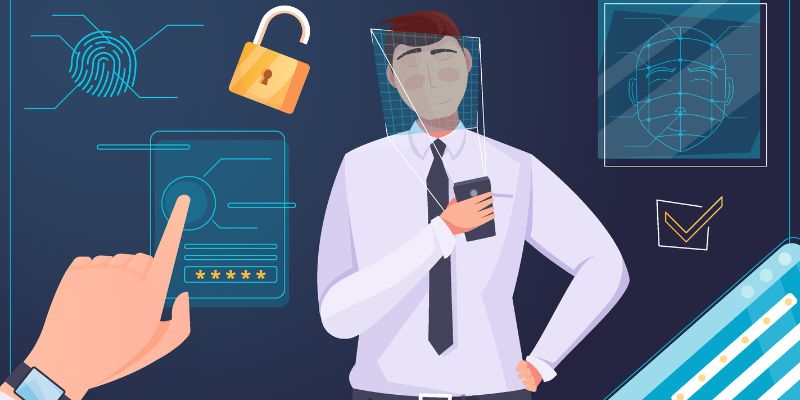
In today’s digital era, where organizations store vast amounts of sensitive data online, access control has become a critical part of every cybersecurity strategy. Whether it’s a multinational enterprise, a government agency, or a small business, controlling who can access information and resources is essential for maintaining data confidentiality, integrity, and availability.
From protecting customer information to preventing insider threats, access control in cyber security plays a central role in ensuring that only authorized individuals can interact with digital assets. Without robust access control systems, even the most advanced security measures can fail, leaving organizations exposed to breaches, identity theft, and compliance violations.
This blog explores what access control means, why it is vital, how it works, its various types, real-world examples, and best practices for effective implementation. We’ll also look ahead at how access control is evolving to meet the challenges of a digital-first, cloud-driven world.
Table of Contents
- What Is Access Control?
- Why Is Access Control Important in Cybersecurity?
- How Does Access Control Work?
- Types of Access Control in Cyber Security
- Examples of Access Control Systems
- Best Practices for Implementing Access Control
- Common Challenges in Access Control
- Future of Access Control in Cybersecurity
- Conclusion
What Is Access Control?
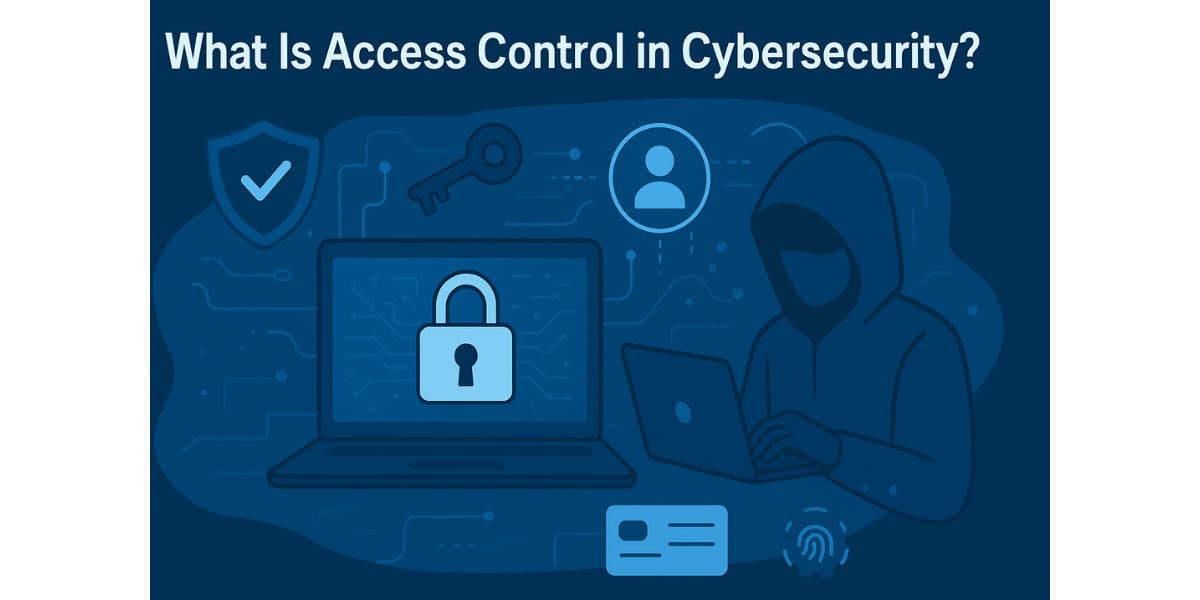
Access control is a cybersecurity mechanism that determines who can view, use, or modify information and resources within an organization’s systems. It is the foundation of data protection — ensuring that only the right people have the right level of access at the right time.
In simpler terms, access control answers three key questions:
- Who is requesting access?
- What are they trying to access?
- Should they be allowed to access it?
An effective access control system verifies a user’s identity and applies predefined rules or policies to determine whether access should be granted or denied. This ensures that sensitive files, databases, networks, and systems remain protected from unauthorized access, both from external hackers and internal misuse.
There are two main stages of access control in cyber security:
- Authentication: Verifying the identity of the user (e.g., through passwords, biometrics, or multi-factor authentication).
- Authorization: Determining what resources the user is allowed to access and what actions they can perform.
In combination, these processes create a secure environment that minimizes risk and strengthens organizational resilience.
Why Is Access Control Important in Cybersecurity?
Access control is one of the most important defenses in cybersecurity because it directly manages how users interact with sensitive assets. Even if an organization has strong firewalls or encryption, a lack of proper access control can lead to major vulnerabilities.
Here are some reasons why access control in cyber security is vital:
1. Prevents Unauthorized Access
Without proper access control systems, unauthorized individuals—whether external attackers or internal users—can gain entry into restricted systems. Implementing structured access control ensures that sensitive data is only available to users with verified permissions.
2. Protects Sensitive Data
Every organization handles confidential data such as employee records, customer information, and financial transactions. Access control ensures this data is not exposed to individuals who don’t need it.
3. Reduces Insider Threats
Many cyber incidents originate internally, either due to negligence or malicious intent. Effective access control reduces these risks by applying the principle of least privilege—giving users only the access necessary to perform their duties.
4. Ensures Regulatory Compliance
Regulations like GDPR, HIPAA, ISO 27001, and PCI DSS mandate strict control over data access. A strong access control framework helps meet these compliance requirements.
5. Supports Zero Trust Security Models
Modern cybersecurity strategies like Zero Trust depend heavily on robust access control systems to verify every user and device before granting access.
6. Enhances Accountability
With audit logs and role-based controls, organizations can track who accessed what, when, and how. This improves visibility and simplifies incident investigations.
How Does Access Control Work?
At its core, access control works by establishing a set of rules and mechanisms that decide who can access specific systems or data. Here’s a breakdown of how it operates:
Step 1: Identification
A user requests access to a system by providing identification credentials—such as a username, ID card, or security token. This identifies who is attempting to gain access.
Step 2: Authentication
The system verifies the user’s identity using methods like passwords, biometrics, or multi-factor authentication (MFA). Only verified users move to the next stage.
Step 3: Authorization
Once authenticated, the system checks access policies to determine what resources or actions the user is permitted to access.
Step 4: Access Enforcement
The access control system enforces the rules, allowing or denying access accordingly. For example, an employee may be able to view a document but not edit or delete it.
Step 5: Monitoring and Auditing
Every access request and action is logged to monitor behavior, detect anomalies, and ensure compliance.
In modern organizations, this process is often automated using advanced access control systems integrated with identity and access management (IAM) platforms.
Types of Access Control in Cyber Security
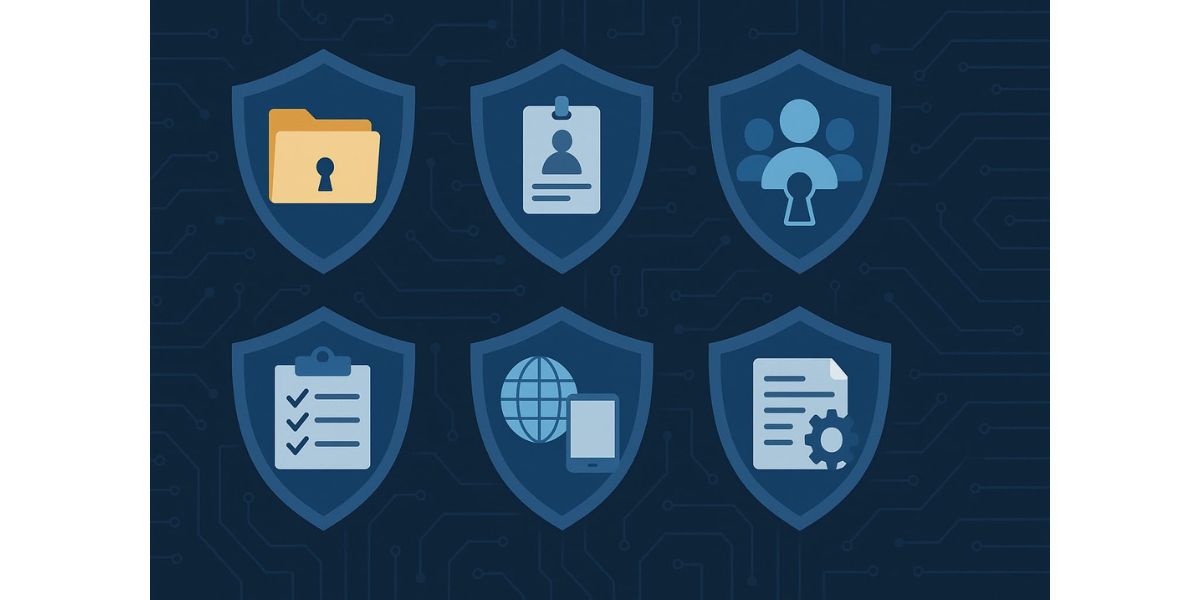
There are several types of access control in cyber security, each suited to different business needs and security levels. Understanding these helps organizations select the right model for their environment.
1. Discretionary Access Control (DAC)
In Discretionary Access Control, the owner of a resource determines who can access it. For instance, a file owner can decide which users can read or modify the file. While flexible, DAC can be risky because users have significant control, which may lead to accidental data exposure.
2. Mandatory Access Control (MAC)
Mandatory Access Control is a more rigid model used primarily in government and military systems. Access rights are assigned based on information classification (e.g., confidential, secret, top secret) and user clearance levels. Users cannot alter access permissions, ensuring strict security.
3. Role-Based Access Control (RBAC)
Role-Based Access Control is one of the most common and effective models. Here, access is granted based on a user’s role within the organization. For example, HR staff may access employee data, while IT admins have system control rights. RBAC simplifies management and ensures consistency.
4. Rule-Based Access Control
In this model, access is granted or denied based on specific rules defined by the organization—such as time of day, location, or device type. This approach provides flexibility and enhances security for sensitive systems.
5. Attribute-Based Access Control (ABAC)
Attribute-Based Access Control uses a combination of attributes (user, resource, environment, and action) to determine access rights dynamically. For example, a user may access data only if they are in a secure location and using an authorized device. ABAC is highly flexible and ideal for complex, cloud-based systems.
6. Policy-Based Access Control (PBAC)
A newer model, Policy-Based Access Control focuses on centralizing access decisions using policies defined by security administrators. PBAC aligns closely with Zero Trust architectures and adaptive authentication.
By understanding these types of access control in cyber security, organizations can implement the best combination of models to balance security and usability.
Examples of Access Control Systems
To understand access control systems better, let’s explore some practical examples across both physical and digital environments.
1. Physical Access Control Systems
These systems control entry to physical spaces—such as offices, data centers, or server rooms—using mechanisms like:
- Key cards and RFID badges
- Biometric scanners (fingerprint, facial recognition)
- Smart locks or turnstiles
- Security guards with access logs
2. Logical Access Control Systems
Logical access control protects digital systems and data. Examples include:
- User logins and password systems
- Multi-factor authentication (MFA)
- Network access controls (firewalls, VPNs)
- Role-based application permissions
- Endpoint security solutions
3. Cloud Access Control Systems
As businesses move to the cloud, access control extends to platforms like AWS, Microsoft Azure, and Google Cloud. Cloud access control systems allow administrators to define granular access policies for users, applications, and data across hybrid environments.
4. Identity and Access Management (IAM) Solutions
IAM platforms, such as Okta, Ping Identity, and ForgeRock, combine identity verification, single sign-on (SSO), and access control into one centralized system. They ensure seamless and secure access across multiple applications.
These examples illustrate that access control in cyber security is not limited to IT networks—it covers everything from office doors to cloud databases.
Best Practices for Implementing Access Control
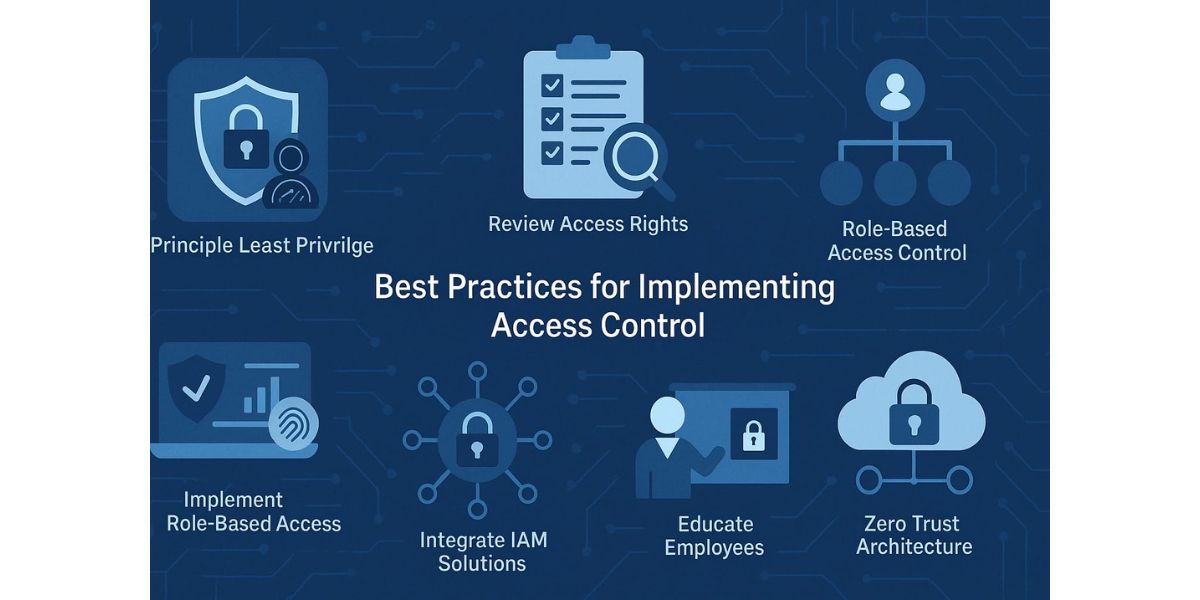
Implementing access control effectively requires planning, consistency, and continuous monitoring. Below are some best practices every organization should follow:
1. Apply the Principle of Least Privilege (PoLP)
Give users the minimum access necessary to perform their jobs. This reduces potential damage from compromised accounts or insider misuse.
2. Use Multi-Factor Authentication (MFA)
Combine passwords with other verification methods like biometrics or security tokens to strengthen authentication.
3. Regularly Review Access Rights
Conduct periodic audits to ensure access rights align with current job responsibilities. Remove or modify permissions for inactive or transferred users.
4. Implement Role-Based Access Control
RBAC simplifies access management and ensures consistent permission assignment across departments.
5. Monitor and Log All Access Activity
Use automated logging to record all access attempts and flag suspicious behavior for review.
6. Integrate Access Control with IAM Solutions
Centralizing access control within an IAM system improves efficiency and enhances visibility.
7. Educate Employees
Human error remains a major threat. Train users to follow best practices for passwords, device use, and data handling.
8. Adopt Zero Trust Architecture
Zero Trust assumes that no one—inside or outside the network—should be trusted by default. It enforces continuous verification using strong access control systems.
9. Use Context-Aware Access
Adjust access permissions dynamically based on user behavior, location, or device security status.
10. Automate Access Provisioning and De-Provisioning
Automation ensures that access is granted quickly and revoked immediately when no longer needed.
By following these best practices, organizations can make access control in cyber security more resilient and adaptive to modern threats.
Common Challenges in Access Control
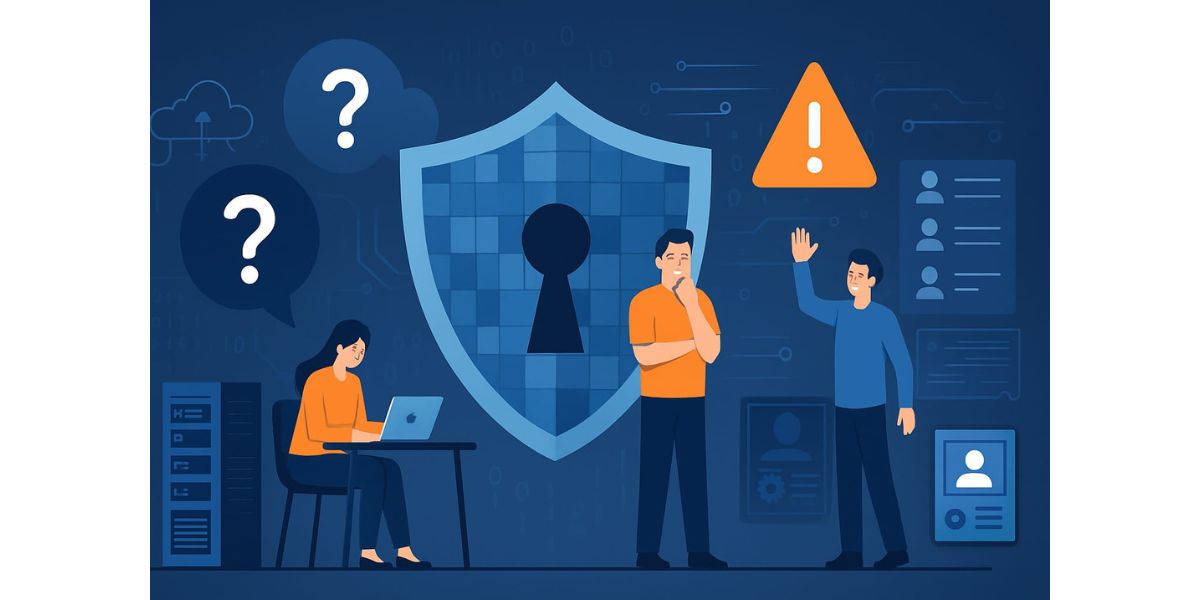
While essential, implementing access control is not without difficulties. Some of the most common challenges include:
1. Complexity in Large Organizations
Managing thousands of users and permissions can quickly become unmanageable without automated systems.
2. Integration Issues
Integrating new access control systems with legacy applications or multi-cloud environments can create inconsistencies.
3. Human Error
Misconfigured permissions or weak passwords often lead to data breaches. Proper training and oversight are vital.
4. Scalability
As organizations grow, access control must scale without slowing performance or creating bottlenecks.
5. Balancing Security and Usability
Overly strict access controls can frustrate users and reduce productivity. The challenge lies in finding the right balance.
6. Shadow IT
Employees using unauthorized tools or apps can bypass access controls, creating unseen vulnerabilities.
7. Insufficient Monitoring
Without proper auditing, it becomes difficult to detect misuse or compliance violations.
Addressing these challenges requires continuous improvement, automation, and adoption of modern access control systems that align with organizational needs.
Future of Access Control in Cybersecurity
As cyber threats evolve, so must access control in cyber security. The future of access control will be shaped by technologies that make security more adaptive, intelligent, and user-friendly.
1. AI-Driven Access Control
Artificial intelligence and machine learning are being used to analyze user behavior and detect anomalies in real time. AI-based access control can automatically adjust permissions based on risk levels.
2. Zero Trust and Continuous Authentication
Zero Trust models require ongoing user verification rather than one-time logins. Continuous authentication evaluates behavior patterns, device health, and location to maintain secure access.
3. Passwordless Authentication
Biometrics, smart tokens, and cryptographic keys are replacing traditional passwords, reducing the risk of credential theft.
4. Decentralized Identity (DID)
Blockchain-based identity systems allow users to control their own credentials, reducing dependency on centralized databases.
5. Adaptive Access Control
Future access systems will dynamically adjust access rights depending on user activity, context, and threat intelligence.
6. Cloud-Native and Hybrid Access Solutions
With the rise of remote work, access control systems will increasingly support multi-cloud and hybrid environments, ensuring seamless and secure access across all platforms.
7. Integration with Security Automation (SOAR)
Access control will integrate tightly with Security Orchestration, Automation, and Response (SOAR) platforms, allowing automated threat detection and response.
The future clearly points toward smarter, context-aware, and frictionless access control in cyber security—a necessity in an era of AI-driven threats and expanding digital ecosystems.
Conclusion
In conclusion, access control remains the cornerstone of modern cybersecurity. It governs who can access digital and physical assets, how they can use them, and under what conditions. From small businesses to global enterprises, implementing robust access control systems is vital for protecting data, ensuring compliance, and maintaining trust.
The different types of access control in cyber security—including role-based, mandatory, and attribute-based models—offer organizations the flexibility to design security frameworks that align with their needs. However, technology alone isn’t enough; continuous monitoring, employee awareness, and regular audits are equally important.
As the digital landscape evolves, organizations must adopt intelligent, adaptive, and policy-driven access control models integrated with identity management and Zero Trust principles.
At Trevonix, a global cybersecurity company headquartered in London, we specialize in helping organizations implement secure, scalable, and seamless access control systems. Our expert team designs solutions that empower businesses to protect digital identities, manage user access effectively, and stay compliant with global security standards.