

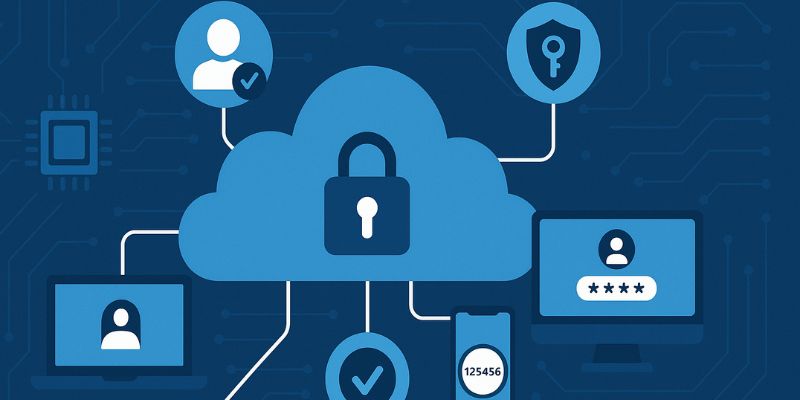
As cloud computing becomes the backbone of digital transformation, organizations are shifting more applications, data, and workflows to the cloud. This migration brings countless benefits such as scalability, agility, and cost savings. However, it also introduces significant challenges in securing identities and controlling access. Traditional security models centered on on-premises infrastructure fall short in this distributed environment. This is where cloud-based IAM solutions play a critical role in ensuring secure and seamless identity and access management (IAM).
This blog explores the essence, features, benefits, and strategic considerations of adopting cloud identity and access management solutions. By the end, you'll understand why businesses must embrace cloud IAM solutions to safeguard their digital assets in the evolving technology landscape.
Table of Contents
- What Is Cloud-Based IAM?
- Core Features of Cloud IAM Solutions
- Benefits of Cloud-Based IAM
- Common Use Cases
- Cloud IAM vs On-Premise IAM
- How to Choose the Right Cloud IAM Solution
- Security Considerations in Cloud IAM
- Future of IAM in the Cloud
- Conclusion
What Is Cloud-Based IAM?
Cloud-based IAM refers to a system that manages digital identities and access rights via cloud infrastructure. Unlike traditional on-premise IAM, which is hosted and maintained in a company's own data center, cloud IAM solutions are delivered as a service. This allows businesses to manage user authentication, authorization, and roles without needing physical hardware.
Key Differences from On-Premise IAM:
- Deployment: Cloud IAM is hosted by a third-party provider, whereas on-prem IAM requires in-house infrastructure.
- Scalability: IAM in cloud environments scales effortlessly compared to rigid on-premise systems.
- Maintenance: Cloud providers handle updates and security patches, reducing IT overhead.
- Accessibility: IAM cloud services support remote and mobile access, aligning with hybrid work trends.
As organizations adopt more SaaS applications and remote work policies, cloud-based IAM becomes an essential part of cybersecurity strategy.
Core Features of Cloud IAM Solutions
1. Identity Lifecycle Management
Managing the entire lifecycle of user identities is a core function of cloud-based identity management solutions. This includes:
- Provisioning: Automating account creation across multiple systems
- De-provisioning: Ensuring timely account removal to reduce security risks
- Role Assignments: Mapping users to specific roles based on job functions
Lifecycle management ensures that users have the right access at the right time, minimizing insider threats.
2. Single Sign-On (SSO)
SSO allows users to authenticate once and gain access to multiple applications without logging in again. This improves user experience while reducing password fatigue and the risk of credential theft.
Cloud-based IAM solutions integrate SSO across SaaS applications like Microsoft 365, Salesforce, and Zoom.
3. Multi-Factor Authentication (MFA)
MFA adds an additional layer of security beyond passwords. Cloud IAM solutions often support various MFA methods:
- SMS or email OTPs
- Biometric authentication
- Mobile authenticator apps
This is crucial in a cloud environment where employees access data from multiple locations and devices.
4. Role-Based Access Control (RBAC)
RBAC ensures users only have access to resources necessary for their role. This minimizes risk and supports compliance.
IAM cloud solutions automate RBAC based on organizational policies, simplifying governance.
5. Integration with SaaS Apps
Modern cloud identity and access management tools easily integrate with a wide range of cloud services. This includes connectors and APIs for popular platforms like Google Workspace, AWS, Azure, and Slack.
This seamless integration ensures centralized control and monitoring.
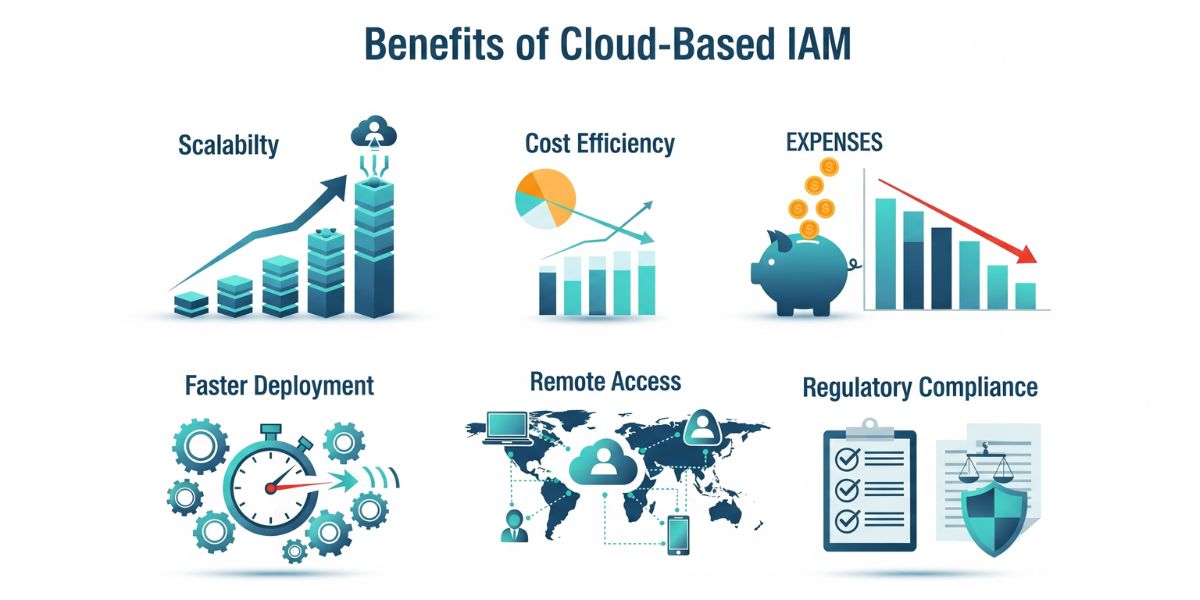
Benefits of Cloud-Based IAM
1. Scalability for Growing Businesses
As companies expand, managing user identities becomes complex. Cloud IAM solutions scale dynamically, accommodating thousands of users without major infrastructure changes.
2. Cost Efficiency
With cloud-based IAM, there's no need for physical servers or dedicated IT staff. Businesses pay for what they use, reducing capital expenditure and operational costs.
3. Faster Deployment and Updates
IAM in the cloud can be deployed in days instead of months. Providers handle system upgrades and security patches automatically.
4. Remote Access for Hybrid Workforce
The modern workforce needs secure access from anywhere. Cloud based IAM supports device-agnostic access, enabling secure collaboration from home, office, or on the go.
5. Regulatory Compliance Readiness
Industries like healthcare and finance must comply with stringent regulations (HIPAA, GDPR, etc.). Cloud-based identity management solutions offer built-in compliance features such as:
- Audit logs
- Access reports
- Policy enforcement
This helps organizations stay compliant while reducing administrative burden.
Common Use Cases
1. Managing Access for Remote Employees
Cloud IAM enables secure access to enterprise systems for remote staff. With MFA and SSO, employees can log in securely without VPNs.
2. Securing Customer and Partner Portals
External users like customers and vendors need access to specific resources. Cloud-based IAM manages their identities and access privileges without compromising internal data.
3. Streamlining Cloud-Native App Authentication
Developers building cloud-native apps need secure identity frameworks. IAM cloud solutions integrate with CI/CD pipelines and APIs for seamless security.
4. Industry Use Cases:
- Healthcare: Secure access to patient records (HIPAA compliant)
- Finance: Protect sensitive data and comply with SOX and PCI-DSS
- Education: Manage access for students, staff, and alumni
Cloud IAM vs On-Premise IAM

Why Cloud-Based IAM Wins:
- Supports agile business models
- Reduces time-to-value
- Delivers centralized visibility and control
- Enables quick response to cyber threats
Modern businesses operating in the digital era cannot afford the latency and rigidity of on-prem IAM.
How to Choose the Right Cloud IAM Solution
When evaluating cloud IAM solutions, consider the following:
- Security Certifications: Look for SOC 2, ISO 27001, and FedRAMP compliance
- Integration Capability: Ensure support for your SaaS and cloud stack
- User Experience: Prioritize intuitive interfaces for admins and users
- Customization: Choose vendors that support custom policies and workflows
- Support & SLA: Review service level agreements and support availability
Shortlist vendors based on your specific industry needs, compliance requirements, and future scalability plans.
Security Considerations in Cloud IAM
Securing cloud-based identity management requires attention to several key areas:
- Data Encryption: All identity data should be encrypted at rest and in transit.
- Zero Trust Architecture: Implement continuous verification instead of implicit trust.
- Regular Audits: Monitor logs and user activities to detect anomalies.
- Least Privilege Principle: Grant minimum access required for job functions.
- Disaster Recovery: Ensure IAM systems have backups and failover mechanisms.
By addressing these considerations, you enhance the resilience of your IAM in cloud environments.
Future of IAM in the Cloud
The future of cloud identity and access management is being shaped by trends like:
- AI & ML: Enhancing threat detection and behavior analytics
- Passwordless Authentication: Biometrics and hardware keys replacing passwords
- Decentralized Identity (DID): Giving users control over their digital identities
- Cloud-native Governance: Integrating IAM with cloud operations and DevOps pipelines
As organizations continue their digital transformation journey, cloud based IAM will be indispensable for balancing security and user experience.
Conclusion
In today’s cloud-first world, securing identities is more critical than ever. Cloud-based IAM solutions offer the flexibility, scalability, and efficiency needed to protect digital ecosystems. Whether you're managing remote workforces, integrating with SaaS apps, or navigating regulatory landscapes, cloud IAM solutions deliver unmatched value.
Trevonix, a trusted global IAM services provider, empowers organizations to adopt and manage robust cloud identity and access management frameworks. From strategy to implementation and support, Trevonix ensures secure, compliant, and scalable IAM in the cloud.
Visit Trevonix to learn more about tailored IAM solutions that support your digital transformation goals.